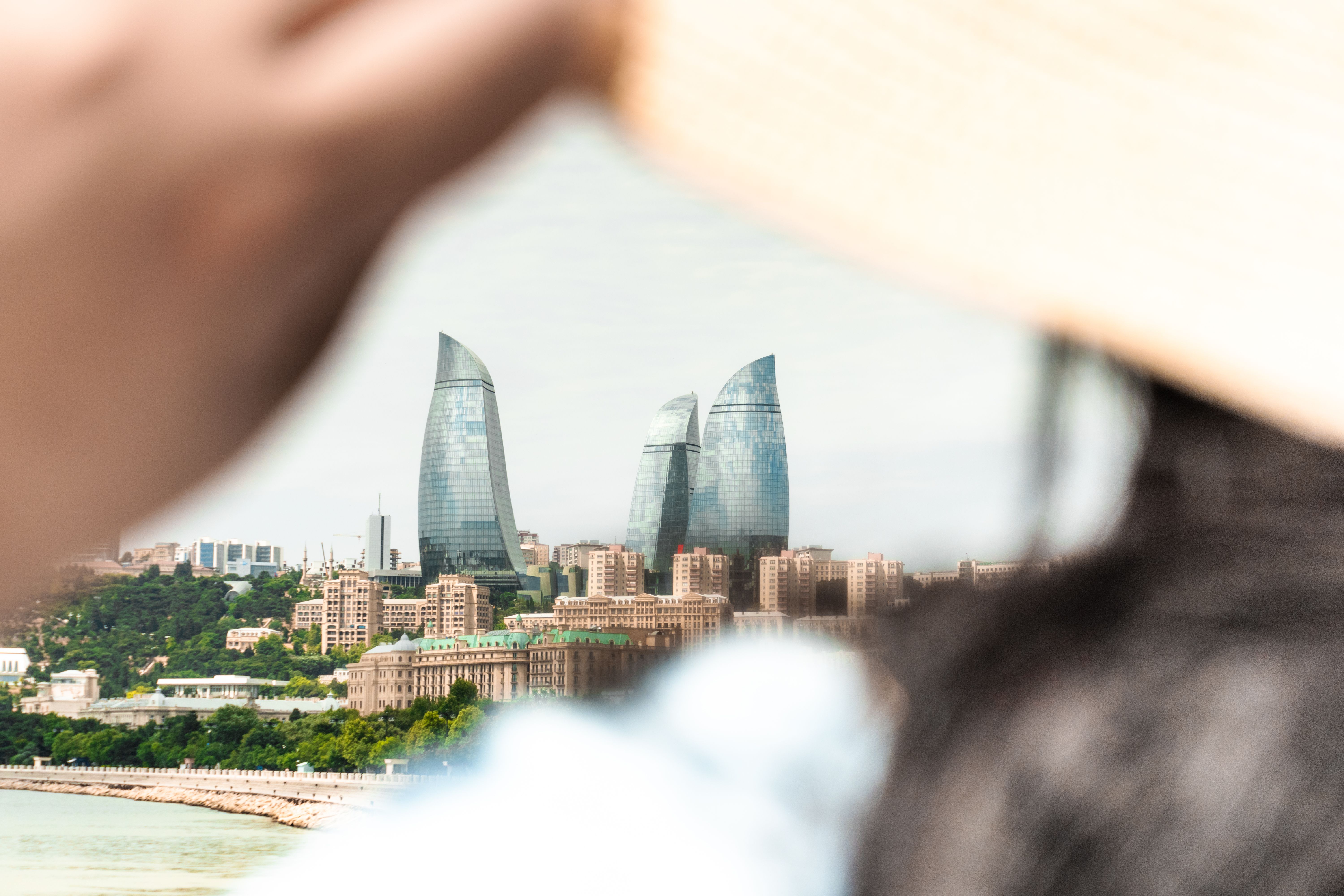

Before you pick a month, look at the live Azerbaijan itineraries from Dubai. This guide explains which season suits each itinerary and why the shoulder months are usually the best value.
Azerbaijan sits at a crossroads where the Caspian Sea meets the Greater Caucasus, and that geography creates four genuinely different travel experiences across a single calendar year. Knowing the best time to visit Azerbaijan is not a matter of preference, it is the difference between walking Baku's Old City at 22°C in April and sweating through cobblestones at 39°C in July. The country does not flatten into one version of itself for visitors. It shifts dramatically, and the season you choose determines which Azerbaijan you get.
Spring (April to June): The Optimal Window for Most Travellers
April through June is the most balanced period in Azerbaijan. Baku temperatures run 15°C to 25°C, the Absheron Peninsula turns green after winter rains, and the roses that give the Sheki region its Silk Road character are in full bloom by mid-May.
The Novruz holiday falls in late March, but its energy carries into April with street markets and traditional sweets still present in local bazaars. By late April, the Gobustan mud volcanoes are accessible on dry ground without the summer dust haze. The Lahij artisan village, perched above the Girdimanchai Gorge, sees comfortable foot-traffic conditions: paths are dry, skies are clear, and the metalworking workshops are open and active.
June begins the heat climb in Baku, pushing towards 30°C by month's end. It is still manageable, but the comfort advantage over July is significant. Visitors who time their Baku stay for April or May, then move north to Gabala or Sheki for early June, get the best of both settings without encountering summer crowds.
Spring and autumn are the two windows most itineraries are built around, because temperatures sit in a comfortable range in both cities and the main festivals fall in those months. That does not make the other seasons wrong. It means you should choose with the weather and the specific places you want to see in mind.
Summer (July to August): High Heat in Baku, Better Conditions in the Mountains
Baku in July and August is not a comfortable place to walk for long stretches. Temperatures regularly reach 35°C to 40°C, and the Caspian humidity makes the heat feel heavier than the number suggests. The city does not shut down, locals adapt, but most of the city's appeal is outdoor: the Old City walls, the Boulevard promenade, the Flame Towers viewed from ground level. All of that is harder work in peak summer heat.
The counterargument for summer travel is the northern mountain region. Gabala, sitting at roughly 700 to 900 metres elevation, runs 10°C to 12°C cooler than Baku throughout July. The Tufandag Mountain Resort above Gabala, one of the few Caucasus mountain destinations with modern gondola infrastructure, offers hiking, zip-lining, and paragliding through August. Crowds are domestic and the accommodation market is active.
Sheki, further west at similar elevation, benefits from the same cooling effect. The Sheki Khan's Palace and its stained-glass work is worth visiting regardless of season, but the walk from the town centre to the fortress walls is significantly more pleasant at 25°C than 38°C.
For travellers who have limited flexibility on dates and must travel in summer: plan to be in Baku for no more than two full days, spend the rest of the trip in the north, and schedule Baku's outdoor sights for early morning before 10am.
Autumn (September to October): The Peak Season With Good Reason
September and October are the months when Azerbaijan earns its strongest reviews. Baku cools from summer highs to a consistent 20°C to 27°C range. The Caspian is still warm enough to swim in early September. The Quba region, Azerbaijan's primary apple-growing belt, begins its harvest from mid-September, and local markets in Quba and Khachmaz fill with produce that gives you a direct read on what the land produces.
The Shaki Harvest Festival, typically held in October, draws domestic and regional visitors for walnut harvesting, local cuisine demonstrations, and craft exhibitions. It is not a manufactured tourist event, it is a working agricultural festival that happens to be open to visitors.
October in Baku is also the most photogenic month for architecture. The low-angle light in late afternoon catches the limestone facades of the Old City (Icheri Sheher) in a way that the flat midday summer light does not allow. The Maiden Tower, the Multangular Tower, and the caravanserais along Kichik Qala Street read differently in autumn light.
Flight and hotel prices are at their annual peak in September and October. Book accommodation in Baku and Sheki at least eight to ten weeks in advance if travelling during this window.
Winter (November to March): A Specific Trip, Not a General One
Winter in Azerbaijan rewards travellers who come with a specific plan. It is not a universally good time, Baku in January is grey, 5°C to 8°C, and the outdoor appeal of the city shrinks considerably. But two contexts make winter worth considering.
The first is skiing. Shahdag Mountain Resort in the Quba district is the most developed ski area in the South Caucasus outside Georgia. It operates from December through March with snowfall that is more reliable than most people expect from the region. The resort has direct cable car access from the base village, a vertical drop of over 900 metres, and runs suited to intermediate skiers. Lift tickets are priced well below comparable European resorts.
The second is Sheki in snow. The town's 18th-century architecture, the Khan's Palace, and the surrounding forest take on a character in winter that is entirely different from the warm-season experience. Snow usually arrives in Sheki by late November and stays through February. The town is quiet, guesthouses are cheap, and the local dushbara (lamb dumpling soup) is not a suggestion in that weather, it is a necessity.
Lahij village in winter is accessible but requires a 4WD or confidence on icy mountain roads. The village nearly empties in the coldest months, which makes the experience either very atmospheric or very empty depending on what you are looking for.
Month-by-Month Weather and Cost Overview
| Month | Baku Avg Temp (°C) | Rainfall | Crowds | Relative Cost |
|---|---|---|---|---|
| January | 4 – 8 | Low | Very Low | Budget |
| February | 4 – 9 | Low-Moderate | Very Low | Budget |
| March | 8 – 14 | Moderate | Low (Novruz spike) | Low-Moderate |
| April | 13 – 20 | Moderate | Moderate | Moderate |
| May | 18 – 25 | Low-Moderate | Moderate-High | Moderate-High |
| June | 24 – 30 | Low | Moderate | Moderate |
| July | 29 – 39 | Very Low | Moderate | Moderate |
| August | 29 – 40 | Very Low | Moderate | Moderate |
| September | 23 – 30 | Low | High | Peak |
| October | 16 – 24 | Moderate | High | Peak |
| November | 10 – 16 | Moderate-High | Low | Low-Moderate |
| December | 5 – 10 | Moderate | Very Low | Budget |
Festival Calendar: Dates Worth Planning Around
Azerbaijan's festival calendar is not dense, but the events it does have are tied closely to the agricultural and cultural calendar rather than to tourism marketing.
Novruz (March 20-21): The Persian New Year is the country's largest annual celebration. Baku sees bonfires, public dancing, and traditional sweets in the days leading up to the equinox. If you are in the country during this window, the energy is unlike any other time of year. Note that domestic travel volumes spike and some accommodation books out weeks in advance.
Goychay Pomegranate Festival (October): Held annually in Goychay, roughly 200km west of Baku, this is a genuine agricultural festival around pomegranate harvest. The region produces a significant share of Azerbaijan's pomegranate crop, and the festival includes juice pressing, local food, and craft stalls. It is a half-day trip from Baku or a stop en route to Sheki.
Shaki Harvest Festival (October): Walnut, apple, and grape harvests converge in October in the Shaki-Zagatala region. The town of Sheki organises cultural programming around this period. Dates shift year to year, so confirm locally or through a tour operator.
Formula 1 Azerbaijan Grand Prix (April/May): The Baku City Circuit race takes place in late April or early May. It is a high-energy period for the capital, but hotel prices double or triple for the race weekend. If F1 is not your reason for visiting, avoid that specific weekend.
Planning Your Trip to Azerbaijan
Azerbaijan covers more geographical range than most travellers expect. The Absheron Peninsula (Baku and surrounds), the Greater Caucasus foothills (Sheki, Gabala, Quba), and the Karabakh region all require different planning logic and different timing windows.
The spring and autumn windows work well for travellers who want to cover all three zones in one itinerary: Baku for two to three days, then a loop north through Quba and Sheki, then back. In summer, that loop is still viable but requires more mountain-focused scheduling. In winter, the loop only works if Shahdag skiing is part of the plan.
For India-based travellers, direct flights from Mumbai, Delhi, and Hyderabad to Baku (GYD) run through AZAL and connecting carriers, with flight times of four to five hours. For UAE-based travellers, Baku is under three hours from Dubai on direct services, making Azerbaijan one of the more accessible Caucasus destinations from the Gulf.
You can explore full itineraries and departure options on the Azerbaijan holidays page. If the December break is your reason for travelling, compare the Georgia and Azerbaijan National Day options before you choose a flight.
Frequently asked questions
April and early May offer the best balance. Temperatures in Baku stay between 15°C and 22°C, rainfall is manageable, and the crowds that define September and October have not yet arrived. Prices are moderate rather than peak. If October suits your schedule better, the weather is equally good but you will pay more for accommodation and compete for bookings at popular guesthouses in Sheki.
Yes, for two specific reasons: skiing at Shahdag Mountain Resort (December through March) and the atmospheric experience of Sheki under snow. Baku itself is less compelling in winter, the outdoor city loses much of its appeal in cold grey weather. A winter trip works best if you plan for the mountains first and treat Baku as a transit point rather than a destination in that season.
July and August regularly see 35°C to 40°C in Baku, with Caspian humidity adding to the heat index. It is not unmanageable if you plan around it: early morning sightseeing before 10am, air-conditioned restaurants and museums in the midday hours, and evening walks after 6pm when temperatures drop. Travellers who want to spend full days walking the Old City should avoid July and August and choose April, May, or October instead.
January and February are the cheapest months for both flights and hotels. November and December follow. If budget is the priority and you are open to the winter mountain experience, a January trip to Shahdag for skiing can be significantly cheaper than the same itinerary in October. Spring shoulder dates, particularly early April and late May, offer lower prices than the October peak while still providing good weather.
Most travellers use an e-visa or visa on arrival depending on passport nationality. The e-visa is usually processed within a few working days, but apply at least a week before travel and check the official portal for current rules. UAE residents should confirm the route for their passport rather than relying on residence alone.
Five days is a sensible minimum for Baku, Gabala and Sheki without turning the trip into a road race. Baku deserves two full days for the Old City and Absheron. Gabala works as a day trip, while Sheki is better with an overnight stay. Add two or three more days if you want Shahdag skiing or the Quba region.