
Start with the Russia holidays from Dubai to see the live trip shapes. This guide explains when Murmansk gives you the best chance of clear, dark skies.
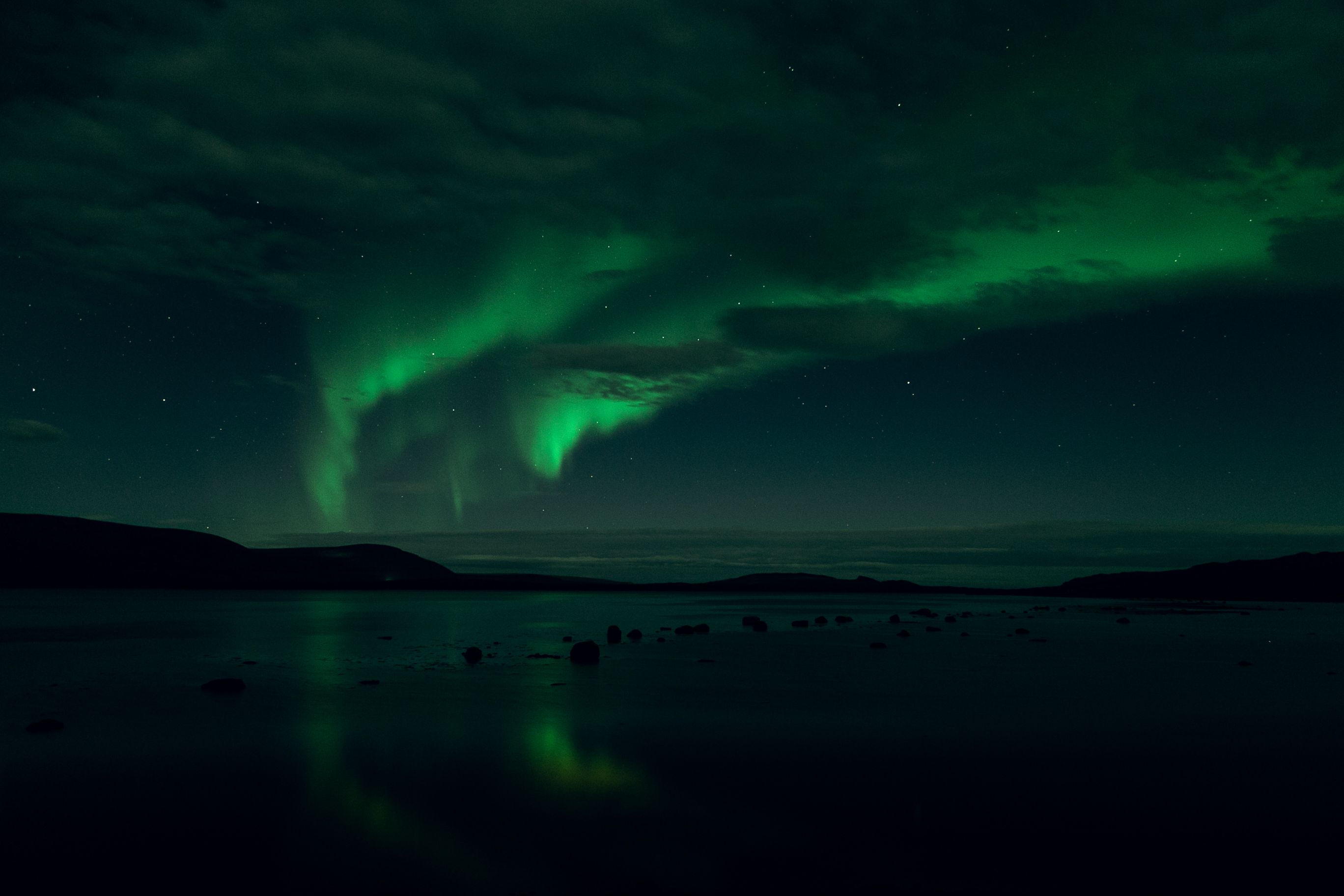
Most aurora hunters fly to Iceland or Norway, spend four nights watching cloud cover roll in, and fly home with nothing. Murmansk solves that problem with arithmetic: the best time for the northern lights in Murmansk window runs from late November through January, covering 40 consecutive days of polar night when the sun does not rise at all. No other major northern lights destination in Europe gives you that kind of uninterrupted darkness. Tromsø gets polar night for about 61 days total but is heavily booked and weather-dependent. Iceland sees only partial darkness in November. Murmansk, at 68.97°N, sits above the Arctic Circle far enough that daylight simply stops for six weeks, and the aurora can appear any hour of the night.
Why the Polar Night Window Is the Real Advantage
The northern lights require two conditions: geomagnetic activity and darkness. Most destinations give you plenty of darkness for only a few weeks before twilight returns. Murmansk's polar night runs from December 2 to January 11, but usable aurora darkness starts in late November when the sun dips below the horizon by early afternoon and does not return until mid-morning.
The polar night around Murmansk lasts roughly 40 days, one of the longest continuous dark periods of any northern lights destination in Europe. That gives aurora hunters a wide window rather than a few nights of date-gambling, though clear skies are never guaranteed.
What that means practically: you are not racing to get outside by 6 PM before city lights overpower the sky. In Murmansk in December, it is dark at 11 AM. The aurora can appear at noon. Guests who book 7-night itineraries in this window typically get 3 to 5 clear-sky nights, compared to 1 to 2 clear nights on a standard 4-night Iceland trip in the same month.
Understanding the KP Index: What You Actually Need for Naked-Eye Aurora
The KP index measures global geomagnetic activity on a scale from 0 to 9. At Murmansk's latitude, you need a KP of 3 or higher to see aurora with the naked eye on a clear night. KP 1 to 2 is possible but requires a camera with long exposure and a very dark field site.
From November through January, Murmansk averages 15 to 18 nights per month with KP 3 or above, based on historical NOAA data. February and March also see strong activity (solar maximum years push averages up) but those months trade polar night darkness for twilight hours, which compress your viewing window.
The peak geomagnetic months globally align closely with Murmansk's polar night: November, December, and January sit near the spring and autumn equinox shoulders when Earth's magnetosphere is most receptive to solar wind. This alignment is not a coincidence. It is why the city consistently outperforms higher-latitude destinations that have long darkness but weaker KP averages.
| Month | Polar Night | Avg KP 3+ Nights | Avg Clear-Sky Nights | Best For |
|---|---|---|---|---|
| November | Partial (from Dec 2) | 14 | 8 | Early arrivals, lower crowds |
| December | Full (Dec 2–31) | 17 | 7 | Peak darkness, New Year tours |
| January | Full (until Jan 11) | 16 | 9 | Best clear-sky average, less crowd |
| February | None | 15 | 11 | Daylight activities + evening aurora |
January is the single best month if clear skies are your priority. The polar night is ending but the city still gets only 2 to 3 hours of twilight, and cloud cover statistically drops compared to December.
Where to Stay: Glass-Ceiling Cabins and Ice Hotels
Murmansk city itself is a working port of 290,000 people. Most serious aurora trips base at lodge properties 30 to 80 kilometres outside the city, where light pollution drops sharply.
The Snow Village Murmansk, built entirely from ice and snow each December near Kola, features glass-ceiling suites that let you watch aurora from your bed without leaving the warmth of a sleeping bag rated to -30°C. Rooms start at around 18,000 RUB per night (approximately $200 USD at 2026 exchange rates), with availability tight from December 20 to January 5.
Several smaller operators around Lovozero and Teriberka (2 hours from Murmansk) run glass-dome cabin camps. Teriberka became internationally known after the 2014 film Leviathan was shot there. The landscape is treeless tundra directly on the Barents Sea, which means unobstructed horizon views in every direction. These camps run 4 to 6 cabins each and book out 3 to 4 months ahead for January dates.
For a mid-range option, Murmansk city hotels like the Arctic Hotel or Park Inn by Radisson work as a base for guided excursions. The guided transport picks you up, drives you to dark-sky sites, and returns you by 2 AM. No glass ceiling, but the flexibility to switch locations based on real-time cloud data.
Activity Calendar: What to Do During Daylight Hours (Or What Passes for Them)
Polar night does not mean 24 hours of nothing. It means 2 to 4 hours of blue-grey twilight, which is enough light for outdoor activities, just not enough for aurora.
Dog sledding: The Murmansk region has several licensed husky farms. A standard 2-hour sledding run costs 5,000 to 8,000 RUB per person. Most farms let solo travellers drive their own 6-dog team after a 20-minute briefing. Farms near Monchegorsk (140 km south) run on fixed schedules: departures at 10 AM and 1 PM during twilight windows.
Reindeer safaris: The Sami people of the Kola Peninsula have herded reindeer here for centuries. Several Sami family operations offer 3-hour reindeer sleigh excursions and traditional meal experiences for 4,000 to 6,000 RUB. Book directly through the Lovozero Cultural Centre or via Murmansk city tour operators.
Snowmobiling: The Kola Peninsula tundra opens up properly for snowmobiling by mid-December when ice thickness on lakes reaches 30 cm. A half-day guided route covering 80 to 120 km runs approximately 12,000 to 15,000 RUB including equipment.
Ice fishing: Lake Imandra, 150 km south, is one of the largest lakes in Europe. Guided ice fishing half-days start at 3,500 RUB and include equipment, a heated fishing hut, and the option to cook your catch on-site. The season runs December through March.
Icebreaker tours: Murmansk is home to the world's first nuclear-powered icebreaker fleet. The Lenin icebreaker is permanently docked as a museum. Full-day active icebreaker cruises on the Kola Bay operate December to February and cost approximately 25,000 RUB per person.
Russia Entry for Indian and UAE Passport Holders in 2026
Russia reintroduced its e-visa system for Indian and UAE passport holders in 2023, and as of 2026 it remains the primary entry route for both nationalities.
For Indian passport holders: A single-entry e-visa costs $52 USD and allows a stay of up to 16 days. Apply at least 4 calendar days before travel through the official Russian Ministry of Foreign Affairs e-visa portal (evisa.kdmid.ru). Processing is typically complete within 4 days but allow 7 to be safe. The e-visa is valid for 60 days from issuance and covers tourism, transit, and business purposes. No invitation letter required.
For UAE passport holders: UAE nationals can also apply for the same e-visa under the same conditions ($52, single entry, 16 days). UAE passport holders additionally have access to visa-free entry under the bilateral agreement signed in 2022, which allows stays of up to 90 days in any 180-day period without any prior application. Confirm current status with the Russian Embassy in Abu Dhabi before travel, as bilateral agreements can be updated.
Both nationalities should register with the local police within 7 working days of arrival if staying beyond that period. Hotels handle this automatically. Airbnb and private accommodation hosts are legally required to register guests but compliance varies.
Direct flights from Mumbai and Delhi to Murmansk do not exist. The standard routing goes through Moscow (Sheremetyevo or Domodedovo) with a domestic connection on Aeroflot or S7 to Murmansk Airport (MMK). Total travel time from Mumbai: 14 to 18 hours. From Dubai: 10 to 13 hours via Moscow.
Planning Your Trip to Russia
Murmansk sits within a country that takes planning. The distances inside Russia are not European distances: Moscow to Murmansk is 1,900 km, a 2-hour domestic flight or a 28-hour overnight train. The train is popular with travellers who want to arrive rested and see the Karelia forest transition from their window. Book Sapsan or Allegro train tickets through RZD (Russian Railways) at least 3 weeks ahead for December and January dates.
The wider Russia page covers logistics, regional highlights, and itinerary structures. UAE residents planning from Dubai or Abu Dhabi should start at the Russia holidays page, while Indian travellers can browse the India holidays hub. For another cold-weather trip over the December break, compare the best time to visit Azerbaijan.
Temperatures in Murmansk in December and January average -10°C to -18°C, with occasional drops to -28°C during Siberian air mass intrusions. Base layers, mid-layers, and outer shells rated to -30°C are non-negotiable. Most glass-cabin and ice hotel properties provide expedition-grade suits for outdoor aurora sessions, but personal base layers are your responsibility.
Frequently asked questions
January edges out December on average clear-sky nights (9 versus 7 per month historically) while still offering several days of polar night. KP activity remains strong in January, and lodge availability is better than during the Christmas and New Year rush. If your dates are flexible, target January 5 to 25.
No. Cloud cover completely blocks aurora visibility regardless of geomagnetic activity. This is why a 7-night stay outperforms a 3-night stay significantly. Longer trips give you more chances to catch the 2 to 3 consecutive clear nights that typically appear each week. Some operators offer "chase" services where a driver takes you 100 to 200 km in whichever direction has a clear-sky pocket based on satellite weather data.
Indian passport holders need an e-visa ($52 USD, 16-day stay, processed in 4 to 7 days). UAE passport holders have access to visa-free entry for up to 90 days under the 2022 bilateral agreement, though an e-visa is also available as an option. Both nationalities should verify current entry conditions with the Russian Embassy at least 4 weeks before travel. Political and diplomatic conditions can affect bilateral agreements on short notice.
Murmansk in December and January averages -10°C to -18°C. Cold, but not extreme by Arctic standards. Murmansk is a functioning city with full infrastructure, heated transport, and experienced local guides. First-time Arctic travellers do fine with proper clothing. The risk is not the cold itself but underpacking: insufficient base layers or cotton fabrics that hold moisture. Every reputable tour operator provides a gear list and many offer equipment rental on arrival.
Four to five nights gives you a reasonable chance because cloud cover is the main obstacle, not the darkness. A three-night trip can work if you are flexible and willing to change plans at short notice. Most aurora trips include evening drives to clearer ground outside the city, so choose an operator that runs these throughout the stay rather than once.
Yes, and many itineraries do. The overnight train between the two takes most of a day, while a domestic flight is roughly two hours. Murmansk needs the darker season, whereas St Petersburg works at any time of year. Allow at least seven nights for both, with three or four in Murmansk and the rest in St Petersburg.